


In this article:
You can improve a bad credit score by paying bills on time, keeping credit card balances low and using products like secured credit cards and credit-builder loans.
Before you work on improving your credit score, check your credit reports and scores. You can then identify what's making the biggest negative impact and take a targeted approach to address it.
Here's how to improve a bad credit score so you can enjoy all the advantages good credit provides.
What Is a Bad Credit Score?
A bad credit score is typically considered a FICO® Score☉ Θ below 580 or a VantageScore® credit score below 600. That said, lenders may have different ideas of what a bad credit score is when they're reviewing a loan application. The two major credit scoring models separate credit scores into ranges so you can gauge where you stand and take action to improve your credit.
Here are the different credit score ranges:
| Credit Score | Rating |
|---|---|
| 300 - 579 | Poor |
| 580 - 669 | Fair |
| 670 - 739 | Good |
| 740 - 799 | Very good |
| 800 - 850 | Exceptional |
VantageScore, a credit scoring model developed by the three credit bureaus (Experian, TransUnion and Equifax), also uses a scale ranging from 300 to 850. But the score ranges vary slightly.
| Credit Score | Rating |
|---|---|
| 300 - 600 | Poor |
| 601 - 660 | Fair |
| 661 - 780 | Good |
| 781 - 850 | Excellent |
How to Improve Your Credit Score
No matter where your current credit score falls, you can boost your financial health starting now. Try these short- and long-term strategies to take control of your credit and improve your scores.
1. Check Your Credit Score
First, check your credit score for free using credit score websites, score monitoring offered by your current lenders or credit card issuers, or by signing up for an Experian account.
You have many different credit scores, including industry-specific ones used by credit card issuers and auto lenders. But since the FICO® Score 8 is the FICO® Score version most often used by creditors to make lending decisions, it can stand in as a good gauge of your credit.
Your FICO® Score is most impacted by the following factors:
| Factors That Impact Your FICO® Score | |
|---|---|
| Payment history (35%) | Whether you always pay bills on time or have had late or missed payments in the past |
| Amounts owed (30%) | How much total credit you have available and how much of it you're actively using |
| Length of credit history (15%) | How long you've been using credit, plus the age of your oldest and newest credit accounts and average age of all your accounts |
| Credit mix (10%) | The different types of installment and revolving credit accounts you've had and are currently managing |
| New credit (10%) | The number of recent credit accounts you've opened and applications you've made |
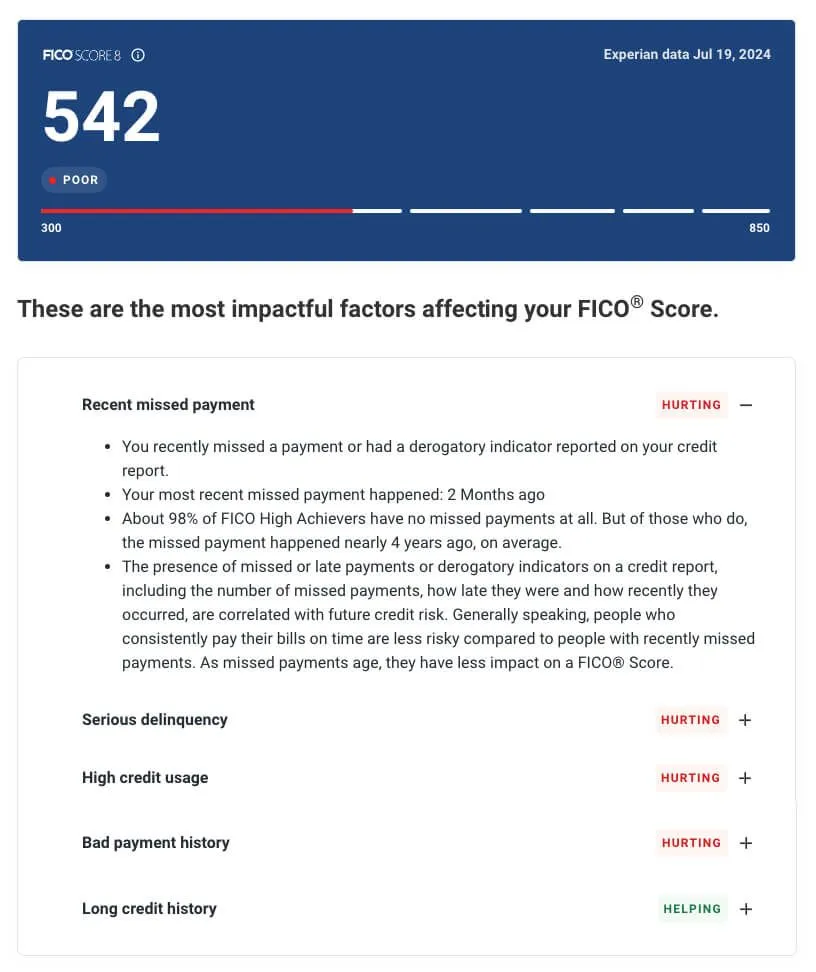
When reviewing your Experian credit score, you'll receive a summary of the factors affecting your credit score. In the example below, factors like recent missed payments, delinquencies, inconsistent payment history and high credit usage are all contributing to a bad credit score. On the other hand, a long credit history is a positive factor helping the credit score.
2. Review Your Credit Report for Inaccuracies
It's also important to check your credit report for any inaccuracies. You can access your credit report from each of the three credit bureaus once a week for free at AnnualCreditReport.com; you can also get your Experian credit report, updated daily, for free anytime. Check your personal data, such as your name and address, inquiries for new credit, open and closed credit accounts, accounts in collections and public records like bankruptcy filings.
There may be differences in your credit reports across the three bureaus, such as a hard inquiry on just one report rather than on all three. This is normal, since creditors are not required to check credit scores from or report credit payments to all three credit bureaus. But if you see anything that is incorrect, you have the right to dispute it directly with the credit bureaus. Some errors can impact your credit score, such as a falsely reported late payment or an account you don't recognize that may be a result of identity theft.
3. Pay Your Bills on Time
Because payment history is the biggest contributor to your score, take steps to ensure you never pay late:
- Set up autopay. Opt for autopay for recurring bills, such as credit card and car payments. You won't have to remember to log in to a payment portal or send a check. Ensure you have enough money in your checking account to cover your payments, or you could be subject to overdraft fees.
- Change your payment due date. If many of your bills are due on the same day of the month, making it more difficult to pay them on time, you may be able to change the payment due dates with your creditors. It could take a few billing cycles for the change to go into effect. Continue paying as required until the company has confirmed the update.
- Ask for help. If you're concerned you're going to miss a payment, contact your creditor before it happens to explore possible options. Federal student loans, for instance, come with alternative repayment plans that can lower the amount you owe each month. Credit card issuers also may be able to reduce your payment or interest rate if you're experiencing financial hardship.
Learn more: Can One 30-Day Late Payment Hurt Your Credit?
4. Pay Down Debt
Work on paying down revolving debt, such as credit card debt. Ideally, you'll pay off your credit card bill in full at the end of every month. But if you can't, and you're currently carrying a balance, look for ways to reduce expenses or increase income. Then, with the additional money you find in your budget, bring down that debt with these debt payoff approaches:
- Debt avalanche method: Make minimum payments on most of your debts, but send extra money to the highest-interest debt until it's paid off. Then continue that strategy with the next-highest-rate debt, and so on until you've paid off all your debts. This can save the most money in interest.
- Debt snowball method: Alternatively, use the same idea to pay off small balances first, starting with the smallest balance. This may motivate you as you pay off accounts more quickly.
- Balance transfer credit card: Once you have good enough credit to qualify, a balance transfer card provides a 0% introductory APR period that lets you move one or more existing credit card balances to a new card and pay it off without accruing more interest. To make the most of the card, come up with a plan that gets you debt-free within the interest-free time frame.
5. Limit New Credit Inquiries
If you're focused on increasing your score, consider limiting or pausing new applications for credit. A hard inquiry happens when a lender checks your credit to evaluate you for a financial product. It will appear on your credit report and may knock a few points off your credit score. Lenders could consider you a greater risk if you're looking for new credit and attempting to borrow money from many different sources.
Soft inquiries don't affect your credit scores. They occur when you check your own credit score or when a lender or credit card issuer checks your credit to preapprove you for a product.
Tip: When you're ready to apply for new credit, try to get prequalified first. The lender or credit card issuer will conduct a soft inquiry to see if you're likely to qualify, which won't have an impact on your credit score—and you can then submit an official application to the creditor you're confident will approve you.
6. Boost Your Credit
Signing up for Experian Boost®ø®ø for free could help you strengthen credit using your existing financial history. Experian will search your bank account data for eligible cellphone, utility, rent, insurance and streaming service payments, and you can choose which accounts to add to your Experian credit file. You could see an immediate increase to your FICO® Score powered by Experian data thanks to the addition of new positive payment history.
7. Get Help Building Credit
If you're having trouble getting approved for a credit card or loan on your own, you can build credit history with the help of others or with a secured credit card or credit-builder loan. Here's how:
- Become an authorized user. A trusted family member or friend can add you to their credit card account as an authorized user. That account's credit limit and payment history will then appear on your credit report and possibly boost your credit scores.
- Work with a cosigner who has good credit. When you have a cosigner for a loan, the lender considers their credit history in the application, potentially improving your chances of approval. The lender then considers the cosigner jointly responsible for the debt.
- Apply for a secured credit card. To get a secured credit card, you make a cash deposit that usually becomes your credit limit. That allows you to use the card like a traditional credit card and build credit history with less risk for the lender. The issuer may automatically upgrade you to an unsecured card after a certain number of timely payments.
- Consider a credit-builder loan. A credit-builder loan is a loan in reverse: You'll make payments to a lender and at the end of the loan's term, that money will be available to you in a savings account. Most important, like a secured card, it adds on-time payments to your credit file without the risk of going into debt. Before you get a credit-builder loan, make sure the company reports your payment activity to all three credit bureaus.
Consequences of a Bad Credit Score
A bad credit score can lead to these roadblocks:
- Potential rejection when applying for credit: Bad credit can make it harder to get credit cards, lines of credit, mortgages, car loans, personal loans, private student loans and some federal student loans for parents. You may only be able to qualify with a cosigner, who will take on responsibility for the debt if you can't manage it.
- Higher interest rates: If you are approved for credit, lenders may assume there's a higher risk you won't pay back your debt as agreed. As a result, you may pay higher interest rates and fees on loans or credit cards.
- Difficulty getting a rental application approved: Landlords may conduct credit checks to evaluate your payment history and debt-to-income ratio (DTI), with an eye to whether you're likely to pay rent on time.
- Required security deposits: When moving into a new home, utility companies—like those that provide gas, electricity and water—may require you to make a security deposit. Another option is to supply a letter of guarantee from someone who will be responsible for your utility bills if you don't make payments.
- Trouble getting a new cellphone or phone contract: Many wireless providers check credit when you apply for a new postpaid cellphone plan or even get a new device. But you can often opt for a prepaid plan that doesn't require a credit check.
- Pause during an employment background check: Employers may view a limited version of your credit report as part of the background screening process. They may want to confirm information on your application or evaluate how you manage finances if you're applying for a job that involves handling money. They won't see your credit score, but activities that lead to a poor score—such as recent bankruptcies or high debt—will be visible on your credit report and could affect whether you're hired, particularly for finance-related roles.
- Higher insurance premiums in some states: Car insurance companies in most states use information from your credit report, in addition to your driving history, to assess your potential risk of submitting a claim. There are restrictions on how your credit history can be factored into car insurance applications or rates in California, Hawaii, Maryland, Massachusetts, Michigan, Oregon and Utah.
How Long Does It Take to Improve Your Credit Score?
There's no specific timeline when you can expect to see credit score improvements. But if you stick with responsible credit behavior and add positive payment history to your credit report, you can start to see improvements quickly—especially because negative items have less of an impact on your score over time. Large score increases can take several months or more.
Learn more: How Long Does It Take to Build Credit?
How to Maintain a Good Credit Score
Once you've done the hard work to fix a bad credit score, keeping up the momentum is the next step. To get the best access to a variety of financial products at low rates, aim for good credit or better. A good or better FICO® Score starts at 670. Here's how to keep your credit strong:
- Pay all bills on time.
- Maintain low balances on credit cards, ideally by paying off your whole balance each month.
- Only seek out new credit when necessary.
- Keep your oldest credit card account open, and use it regularly, to lengthen your credit history. If you don't have much use for the card, consider using it for a monthly subscription that you put on autopay so you never miss a payment.
- Make a budget that helps you spend less than you earn, and also set aside money for savings, debt repayment and other goals.
- Use a mix of credit cards and loans, if possible (and only when you need it), to demonstrate you can manage multiple different types of credit.
Frequently Asked Questions
What Is a Good Credit Score?
A good credit score is 670 to 739, according to the FICO credit scoring model. A good VantageScore credit score is 661 to 780.
Can I Have Negative Information Removed From My Credit Report?
You can have inaccurate negative information removed from your credit report by filing a dispute with the credit bureaus and with the creditors that supplied the incorrect data. If the negative information is accurate, you can try to have it deleted by sending a goodwill letter to the creditor requesting they remove the notation from your credit reports, but there's no guarantee it will work.
Are Credit Repair Companies Legit, and Should I Use One?
Credit repair companies can't do anything that you can't do yourself. While not all are scams, they are expensive and aren't able to promise that your credit score will increase as a result of their services. Avoid credit repair companies and, instead, dispute credit report inaccuracies and negotiate debt settlement with your creditors on your own for free.
The Bottom Line
Poor credit isn't a reflection of who you are as a person; it's merely data about your personal financial history, and it's never too late to tell a new story. Start with strategies that improve your score, and then use your newfound knowledge and confidence to keep it robust. You can get free credit monitoring to see changes in your credit scores over time and be alerted to changes in your credit report. Once you start seeing the positive effects of having good credit, you may be even more motivated to continue on the journey.
